
Most worn hardwood in Metro Detroit homes doesn't need to be torn out - it needs to be refinished. The tricky part is knowing which one your floor actually needs. Here are the five signs we look for during a hardwood refinishing assessment, and what to expect either way.
1. The Finish Looks Dull or Scratched, But the Wood Underneath Is Sound
If you press a fingernail into the finish and it's just surface-level dullness or light scratching, that's a textbook refinishing job - sanding, staining if you want a color change, and a fresh topcoat. This is the most common call we get, and it's usually the fastest, cheapest fix on this list.
2. Water Marks or Light Discoloration
A gray or black ring from a plant pot or a spill that sat too long almost always sands out completely. Deep black staining where water sat for weeks - a slow appliance leak, for example - sometimes means individual boards need replacing before refinishing, but that's still far cheaper than a full floor replacement.
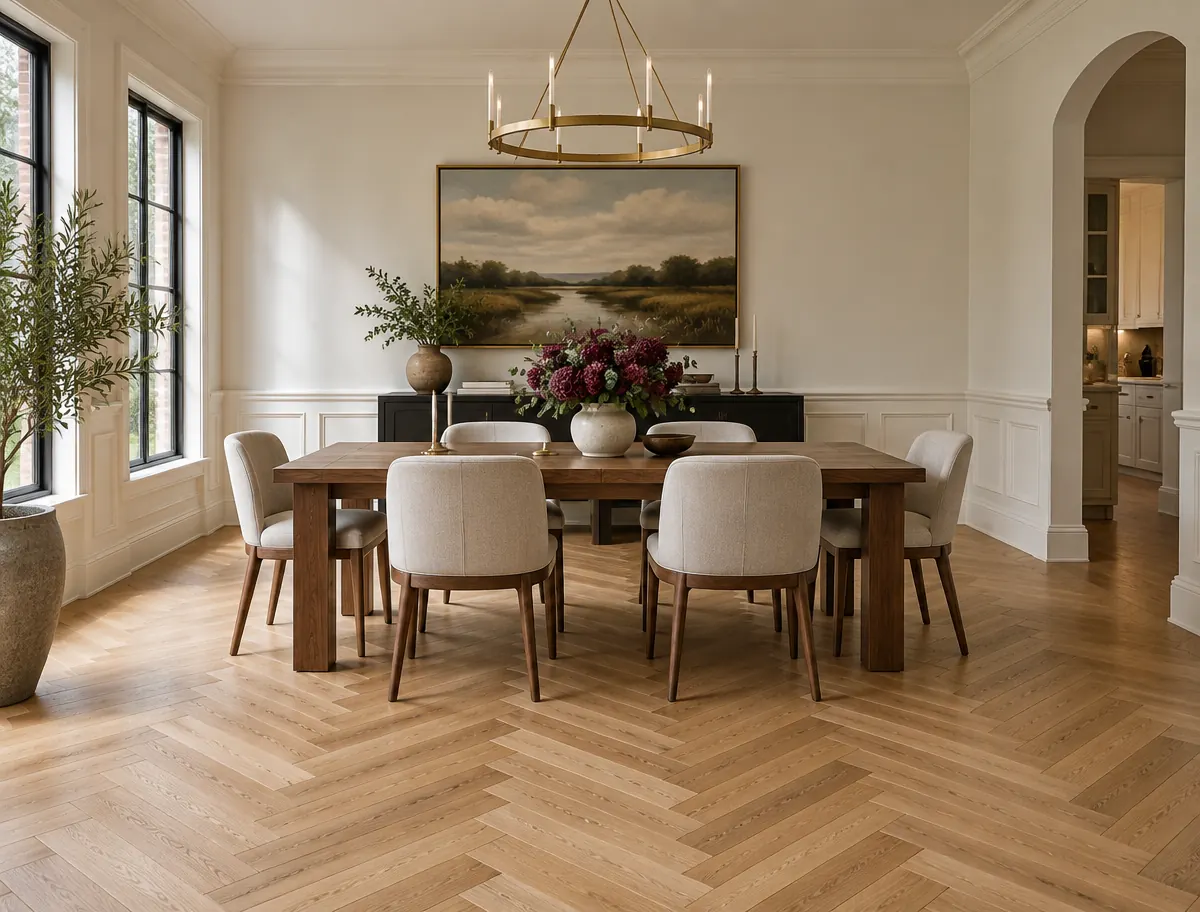
3. You Want a Different Color, Not a Different Floor
Honey-oak floors from a previous decade are one of the most common refinishing requests we get in Metro Detroit - homeowners love the character of their original hardwood but want a modern grey, whitewashed, or espresso tone. A full sand takes the floor back to raw wood, and we can stain it essentially any color, sampled on your actual floor before you commit.
4. Cupping, Gaps, or Boards That Move Underfoot
This is where it gets more involved. Cupped or gapping boards usually point to a moisture problem - common in Michigan homes when humidity swings hard between summer and a dry winter with the furnace running. Refinishing can still work once the moisture source is addressed, but boards that flex or feel spongy usually mean subfloor damage that needs fixing first. We diagnose the cause before recommending a fix - see our floor repair page for how that process works.
5. The Wear Layer Is Gone on Engineered Hardwood
If you have engineered hardwood, the question is wear-layer thickness. At 3mm or more, it can typically be sanded and refinished once or twice. Thinner wear layers can't take a full sand and are better served by a lighter buff-and-coat, or eventually a full replacement.
| Method | Typical Cost | Best For |
|---|---|---|
| Recoat / screen-and-coat | $2 - $3 / sq ft | Minor scuffs, no color change |
| Buff-and-coat (sandless) | $3 - $4.50 / sq ft | Light wear, no color change |
| Full sanding + refinish | $3.50 - $6.50 / sq ft | Deep scratches, color change, most water marks |
Not sure which category your floor falls into?
Book a free in-home assessmentOur 99% Dustless Process
We run commercial HEPA vacuums connected directly to the sanders, so the dust cloud you might expect from a refinish basically doesn't happen - you can live in the house through the project. Most Metro Detroit refinishing jobs finish in 3-5 days including finish cure time, and we'll walk you through the exact schedule room by room before we start. Financing is available if you'd rather spread out the cost, and every job is measured and quoted in person first - book a free estimate to get a firm number for your floor.